The creators
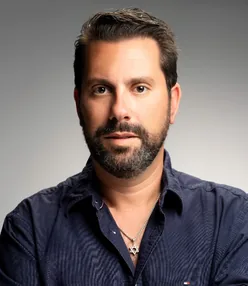
Roi Danino
Entrepreneur · Author · Strategic advisor · IDF reserve lieutenant colonel
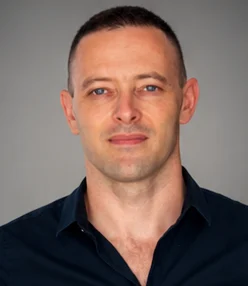
Ariel Averbuch
Attorney · Public speaker · IDF reserve major
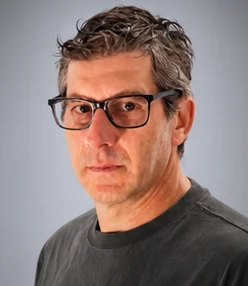
Hagay Gutman
Content creator · Director · Editor · Musician
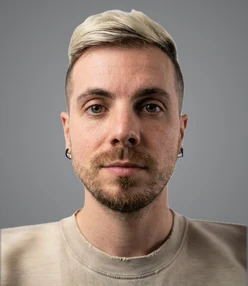
Vic
Editor · Owner of an editing company
The main points
Hamas turned Gaza into a trap
IDF soldiers fight an enemy that operates from inside civilian space: tunnels, booby-trapped buildings and weapons inside civilian infrastructure. Many soldiers fell in booby-trapped buildings, among them three Nahal soldiers in Rafah in May 2024 and four soldiers when a booby-trapped building collapsed on them in Rafah in June 2024.12
Hamas has a protocol: human shields
Hamas's hostage-taking guide, exposed days after the massacre, said some hostages should be used as human shields, and "killed when necessary".3
October 7: Israeli children as human shields
Hamas terrorists led Tomer, 17, house to house in Nahal Oz with a rifle aimed at him, held Yanai and Liel, 12, hostage in Be'eri, and their commander came out to surrender holding Yasmin Porat against him. A UN commission of inquiry found it a war crime.456
The IDF has no mosquito protocol
IDF orders forbid using civilians detained in the field for military missions, and soldiers are reminded of this regularly. An order and a breach of it are different things, and what happened has to be judged on evidence.7
The story was born with Hamas
Its first versions came from Hamas's Health Ministry and from a group Israel designated a terrorist organization. Many of the soldiers' accounts in world media came through Breaking the Silence, which has received about ₪65 million from foreign governments.8910
Kan 11 showed part of the picture
The programme relied in part on Breaking the Silence material and Al Jazeera clips, without telling viewers about the foreign funding, and without showing Hamas's methods or the price soldiers pay.1011
About the film
The film "The Mosquito Protocol: The Real Story" was made in response to an investigation aired on Kan 11, which put the morality of IDF soldiers during the fighting in Gaza up for debate. Our film turns the spotlight on Hamas's brutal methods, presenting documents, testimony and chilling stories of Israeli children and civilians exploited by Hamas terrorists on October 7, alongside the stories of IDF soldiers who gave their lives fighting in booby-trapped buildings.
The film's central message is that the debate over our soldiers' morality ignores the one party solely responsible for the impossible reality in which they are forced to fight: Hamas.
While journalists at home focus again and again on the decisions of our soldiers, who face life-and-death dilemmas, it is time to turn the spotlight on the organization that created those dilemmas, cynically and cruelly exploiting civilian populations, Israeli and Gazan alike.
Our message is unequivocal:
We fully support and back every commander who chose to protect the lives of his soldiers at any possible cost, and yes, even at the cost of the lives of the enemy population.
What to know about Breaking the Silence
Breaking the Silence has received about ₪65 million from foreign governments and state bodies since 2012, according to its own reports to Israel's registrar of nonprofits. The EU lists grants to the group for 2026–2027 for documenting alleged IDF violations in Gaza.1012
CNN's report, the first in English to use the name "mosquito protocol", had one soldier, introduced by Breaking the Silence, which also supplied three photographs.13
Kan 11's programme shows photographs credited to the group five times without telling viewers it is funded from abroad. Its account of two detainees closely matches a testimony on the group's website.1114
Where the story came from
The mosquito protocol does not exist. The IDF never published or promoted it, and IDF orders forbid what it describes. The story was built in several stages. Its first versions come from Hamas, or, as the world likes to call it, Gaza's "Health Ministry". Many of the soldiers' accounts that carried the story into world news came through Breaking the Silence, an Israeli nonprofit that has received about ₪65 million from foreign governments and state bodies since 2012 to influence public debate in Israel. Some of that money is earmarked for documenting alleged IDF violations in Gaza.71012
Gaza's Health Ministry, run by Hamas, says troops use staff and displaced people at Shifa hospital as human shields. It is the earliest claim of this kind in the war that we found.8
The terrorist organization Euro-Med Monitor writes that "some detainees" were used "to storm residential homes and ground tunnels". The sentence names no witness, date, place or unit. Israel designated the group a terrorist organization in 2015, and the designation is still in force. The official list names it Euromid Observer for Human Rights, with Euro-Med as an alternative name.915
The earliest use of the name we found: a Hebrew post on X mentions a "mosquito" procedure. It gives no definition and no source.16
CNN prints "mosquito protocol", the earliest English use we found. Its one soldier was introduced by Breaking the Silence, which also supplied three photographs.13
CBS News attributes the name to Breaking the Silence.17
Kan 11, Israel's public broadcaster, airs "The Procedure".11
Suspected breaches of orders are under military police investigation, and according to Kan 11 none has closed. An order and a breach of it are different things, and what happened in each case has to be judged on evidence.11
Human shields on October 7
Unlike the "mosquito protocol", for which no one has shown an order, a record or evidence of a policy, the terrorist organization Hamas used Israeli civilians as human shields on Black Saturday, during its massacre of women, old people and children. Unlike Kan 11's programme, which rests on anonymous testimony and Breaking the Silence material, Hamas terrorists broadcast the footage of themselves using Israeli civilians, some of them children! The story is so outrageous that even the UN, a body that has taken a hostile line towards Israel in recent years, admits it is true.
Tomer Arava-Eliaz, 17
Kibbutz Nahal Oz
Kibbutz Nahal Oz lies 700 metres from Gaza. On October 7 more than 180 terrorists broke in and carried out a massacre.
In the Elyakim home they streamed the terrified family live on Facebook from Dikla Arava's profile, with Noam Elyakim shot and bleeding. Then they took Dikla's son Tomer, 17, and led him from house to house.
Tomer was made to shout to the neighbours in Hebrew to open up and come out, and to promise that nothing would happen to them. On a kibbutz everyone knows everyone, and a familiar voice in Hebrew was most likely meant to get them to open. When no one answered, the terrorists shot at the windows. At the Idan home they fired through the safe-room door, murdered Ma'ayan and kidnapped her father Tsachi.
The IDF investigation called the method a "neighbor procedure" and found it unique to the Nahal Oz massacre. According to the investigation, Tomer kept his composure and kept telling the terrorists the houses were empty.
At about 12:40 he escaped and was shot near the kibbutz gate, most likely, the investigation assesses, by mistaken fire from Yamam fighters who had been in combat for hours. Tomer did not survive that day.
Yanai Hatzroni, 12
Kibbutz Be'eri
Yanai Hatzroni and his twin sister Liel, 12, were raised in Kibbutz Be'eri by their aunt and grandfather. On October 7 they were held hostage in Pessi Cohen's house with about ten others. Dozens of terrorists held them there for hours while security forces surrounded the house.
During those hours Zehava Hacker sent messages to her sister. According to the messages, the terrorists used Yanai, a 12-year-old, to call her out, as they had done with Tomer in Nahal Oz.
Yanai is telling me to come out. He's with the terrorists.
Zehava Hacker, 14:12
We're going out. They're threatening to shoot us.
Zehava Hacker, 14:14
According to the IDF investigation, most of the hostages in the house were killed by the terrorists' gunfire. Yanai and Liel did not come home. Archaeologists from the Israel Antiquities Authority found Liel's remains only weeks later.
Yasmin Porat
Kibbutz Be'eri
Yasmin Porat was also held hostage in Pessi Cohen's house. The terrorists wanted to leave safely and take the hostages with them to Gaza, and made her phone the police.
He tells me: now you call the police again and tell them to come here. If not, we kill all of you here.
Yasmin Porat
When the terrorists' commander decided to surrender, he did not walk out alone. He brought Yasmin out of the house pressed against him, so that no one would shoot him.
They start leading me to this terrace, and all the while they're holding me tight against them.
Yasmin Porat
The UN Commission of Inquiry found that the commander of Hamas's military wing used an Israeli hostage to shield himself as he walked out of the house, and that he "committed the war crime of using a civilian as a human shield". Yasmin survived.
Days after the October 7 massacre, the instructions Hamas gave the terrorists who invaded Israel were published. Unlike the IDF, Hamas did have such a protocol: according to The Jerusalem Post, its hostage-taking guide said some hostages should be used as human shields, and "killed when necessary".3
What Kan 11 did not tell viewers
Kan 11's programme, made by a broadcaster funded by Israeli taxpayers, relies in part on material from Breaking the Silence, a group funded by foreign governments to influence public debate in Israel. Photographs credited to the group appear on screen five times, and its name is said aloud once. Viewers are not told about the foreign funding, or that some of the material had already run on CNN.101121
Kan's account of two detainees closely matches CNN's, whose soldier was introduced by Breaking the Silence, and runs over photographs the organization supplied.1113
It also closely matches a testimony on Breaking the Silence's own website, archived by July 2025: two people seized on a road, one of them 16, sent into buildings ahead of the soldiers "so that they would explode". The two accounts differ on who in the unit spoke Arabic. Whether the same soldier speaks in both is not known.1114
Kan also shows clips from Al Jazeera and Drop Site News. Israel's government shut down Al Jazeera's broadcasts in Israel in May 2024, under a law that allows closing a foreign channel that harms state security. Drop Site News is an American site whose co-founder Jeremy Scahill published a series of interviews with Hamas leaders, and which has been criticized for giving them a platform. Over one Al Jazeera clip Kan subtitles the channel's claim, "here, for example, they force them to wear IDF uniforms", without any caveat or any note that the claim is unverified.11222324
A presenter says the IDF "in effect confirms" the main findings. That is not true. The IDF's written reply, shown in the same programme, confirms no protocol. It says IDF orders forbid using civilians as human shields or forcing them to take part in operations, and that every suspicion is investigated.711
In memory of the soldiers who fell in booby-trapped buildings and shafts in Gaza
In memory of all of Israel's fallen, and the thousands of soldiers wounded in body and soul.
- טל פשבילסקי שאולוב
- איתן קרלסברון
- אלמוג שלום
- יאיר לוין
- משה ידידיה לייטר
- יוסף חיים (יוסי) הרשקוביץ
- מתן מאיר
- סרגיי שמרקין
- אורי בר אור
- עידו אפל
- אמיר גלילוב
- יהונתן (ג׳וני) קרן
- ניסים מיטל
- אביב גלבוע
- נאור חיימוב
- נועם רביד
- יהלי שרור
- דנילו מוקנו
- חן גרוס
- יואב רוור
- תום רוטשטיין
- אורי יהונתן כהן
Sources 24
- The Times of Israel, 29 May 2024
- The Times of Israel, 11 June 2024
- The Jerusalem Post, 16 October 2023
- Israel Hayom, IDF findings on Nahal Oz, 4 March 2025
- JDN, on Liel and Yanai Hatzroni, November 2023
- UN Commission of Inquiry, 10 June 2024, A/HRC/56/CRP.3
- The Times of Israel, 14 October 2024
- Al-Ahram, 15 November 2023
- Israel's terror designation list
- Israel's registrar of nonprofits, foreign state donations
- Kan 11, "The Procedure", 25 November 2026
- EU Financial Transparency System
- CNN, 24 October 2024
- Breaking the Silence testimony 629747, archived 22 July 2025
- Euro-Med Monitor, 11 December 2023, archived
- Post on X, 27 July 2024
- CBS News, 26 March 2025
- Israel Hayom, 19 October 2023
- "The Mosquito Protocol: The Real Story", citing Kan 11 archive footage
- JNS, IDF probe into the battle of Be'eri, July 2024
- Israeli Public Broadcasting Law, 2014
- NPR, 5 May 2024
- Democracy Now, interview with Jeremy Scahill, 9 July 2024
- Columbia Journalism Review on Drop Site News